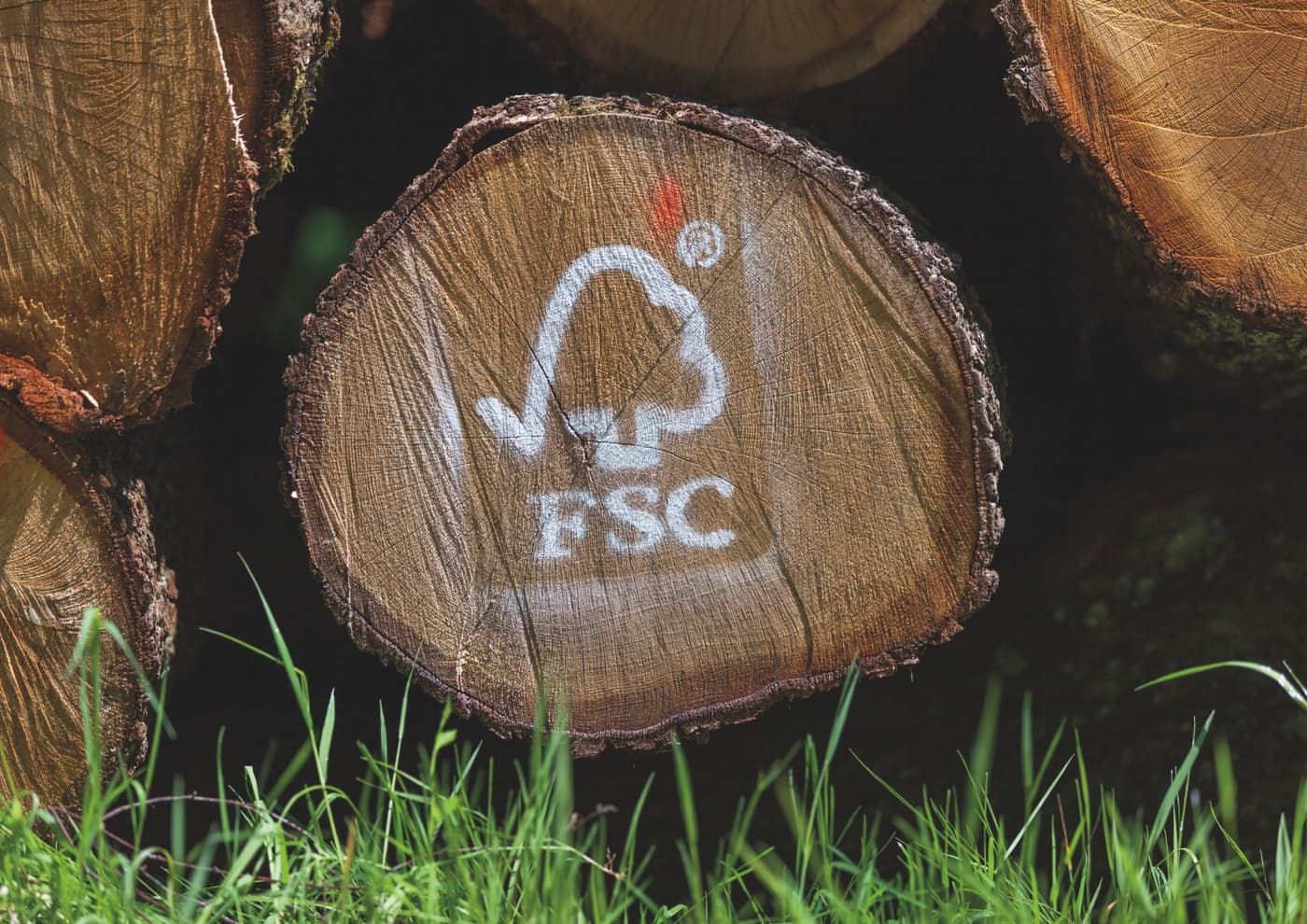
FSC France L’intérêt pour la certification des produits bois reste vif
Malgré un recul des préoccupations environnementales dans un contexte global tendu, Guillaume Dahringer, directeur Forêts et filières de FSC France, observe que l’intérêt pour la certification des produits bois « reste stable ». Les consommateurs continuent de percevoir ces labellisations comme « une garantie que les marchandises ne contribuent pas à la destruction des forêts et qu’elles ont un impact positif sur l’environnement ». En France, le label FSC® (Forest Stewardship Council®) bénéficie du taux de confiance le plus élevé au monde. Le seuil des 1 000 certificats FSC a été dépassé, avec plus de 2 300 sites écocertifiés. Ces sites se répartissent entre environ 25 % d’acteurs de l’industrie du bois, 50 % du négoce et 25 % d’imprimeurs.
Le travail mené auprès des entreprises a pour but d’assurer à la fois la disponibilité de l’offre et la clarté de la demande. Cela implique de développer l’offre de bois certifié, en forêt publique comme privée, tout en stimulant la demande, notamment dans le secteur de la construction, identifié comme un levier clé. Les acteurs institutionnels s’engagent aussi dans cette dynamique. CNP Assurances, premier propriétaire forestier privé français, vise par exemple 100 % de ses forêts certifiées FSC d’ici 2030, soit 55 000 hectares. D’autres protagonistes, comme Macif ou la coopérative CFBL, s’inscrivent dans cette tendance.
Face aux risques croissants qui pèsent sur les forêts, FSC encourage les forestiers à renforcer leurs actions en faveur de la biodiversité – clé de voûte de l’écosystème forestier. Cela implique d’intervenir activement, « en limitant les monocultures, en prenant en compte les dangers liés à la sécheresse, aux fortes chaleurs ou aux ravageurs, comme les scolytes. Une biodiversité plus riche contribue à réduire ces risques. FSC permet également d’apaiser un dialogue parfois complexe avec la société, en offrant un cadre d’échange avec les acteurs locaux, les associations et les riverains. Ce bénéfice est d’ailleurs régulièrement mis en avant par les forestiers eux-mêmes » !
Du côté de la construction, les arguments reposent à la fois sur la matérialisation de l’engagement environnemental et sur la sécurisation de l’approvisionnement à long terme. Ce sujet est d’autant plus important au regard des perturbations récentes du marché, notamment en Allemagne, avec la crise du scolyte qui a entraîné pénuries, hausse des prix et augmentation des coûts de transformation. Ces diff icultés sont en partie liées à des choix de gestion forestière anciens, comme le développement de grandes monocultures de résineux aujourd’hui vulnérables aux ravageurs. La gestion forestière a ainsi un impact direct sur la disponibilité, le prix et la qualité de la ressource. Mais une question centrale demeure : les acteurs de la construction sont-ils prêts à payer plus cher pour des bois écocertifiés afin de valoriser les changements de pratiques des forestiers ?
Crédit photos : ©Stefan Lechne